

User Experience Design
Reimagining Ascott’s Pre-Arrival Experience: A Design Sprint
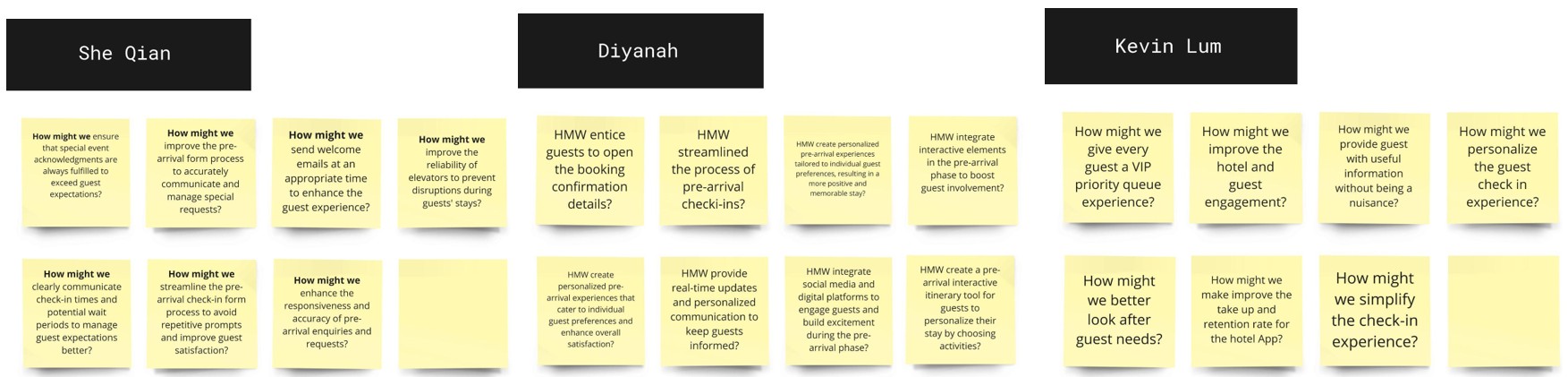
How might we create personalised pre-arrival experiences tailored to individual guest preferences, resulting in a more positive and memorable stay?
Role: UX Designer (3-person team) | Methods: Design Sprint | Duration: 7 weeks
The Challenge
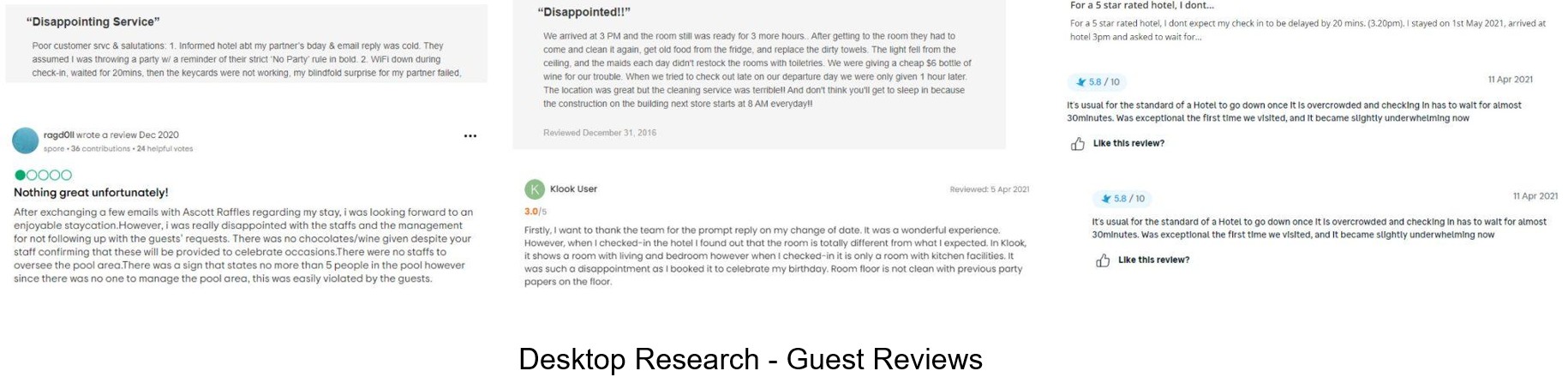
Ascott — a hospitality leader across 220+ cities — faced friction in its digital pre-arrival journey. Despite offering pre-check-in, guests experienced:
❌ Redundant requests (“Confirming preferences again at check-in”)
❌ Communication overload (Conflicting pre-arrival messages)
❌ Broken promises (Unfulfilled surprises like anniversary gifts)
❌ Uncertain timelines (“When will my room be ready?”)
Goal: Transform pre-arrival into a seamless, value-driven experience boosting satisfaction + operational efficiency.
Our Approach:
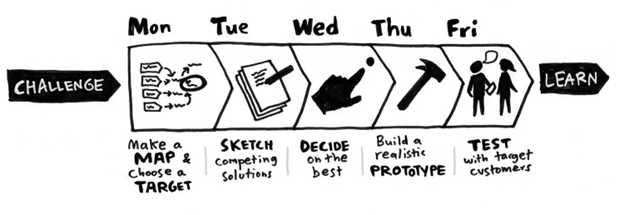
Design Sprint Methodology — Map, Sketch, Decide, Prototype and Test.
Through a 7-week period, we crafted ideas, shortlisted them, built a prototype and tested them with our target audience before re-iterating them.
Design Sprint Process
Phase 1: Map (Monday)
Expert Interview & Opportunity Framing
We launched the sprint with an immersive session with Irene Lim (Assistant VP, Customer Relations), global lead for Ascott’s Voice of the Customer (VOC) program. This grounded our approach in operational realities and guest pain points.
Key Activities:
1. Deep-Dive Insights:
- Mapped critical pre-arrival touchpoints (e.g., preference confirmation, surprise fulfillment gaps)
- Identified systemic bottlenecks causing redundancy/confusion
2. “How Might We” (HMW) Ideation:
- Translated insights into actionable opportunity areas (e.g., “HMW eliminate repetitive preference confirmations?”)
3. Role-Driven Collaboration:
- Decider (She Qian): Prioritized HMWs aligned with business impact
- Facilitator (Dianyah): Streamlined timeboxed discussions
Outcome:
A guest journey map highlighting 4 high-impact intervention zones, validated by VOC data.
Design Sprint: Defining Our North Star
Phase: Long-Term Goal & Risk Mapping
Audacious Vision
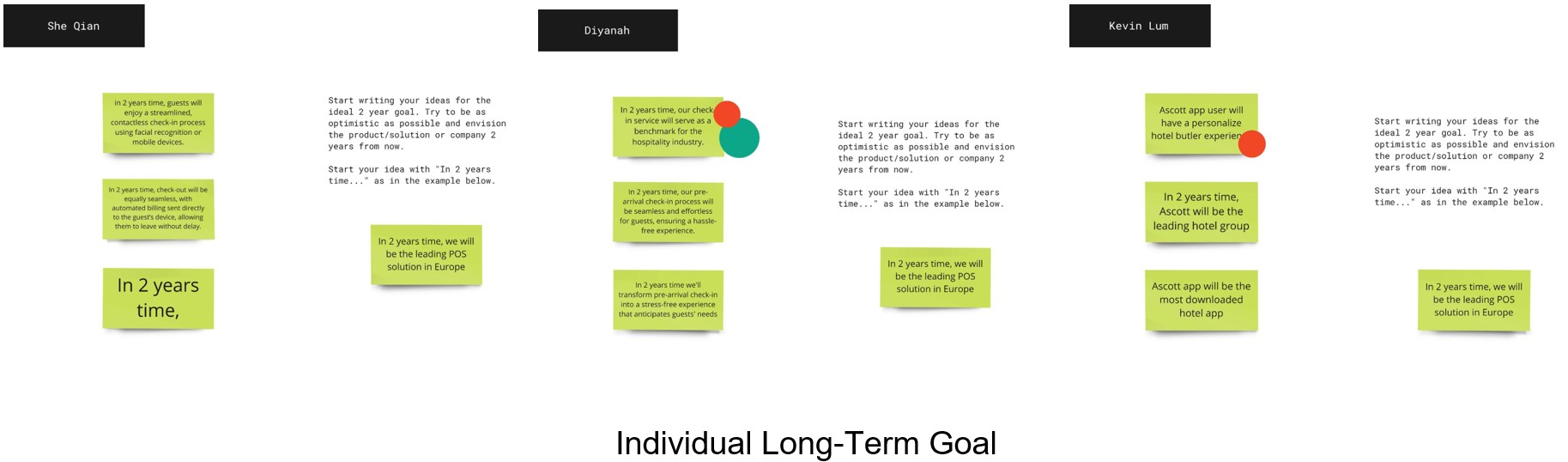
Through collaborative ideation, we aligned on a transformative industry benchmark:
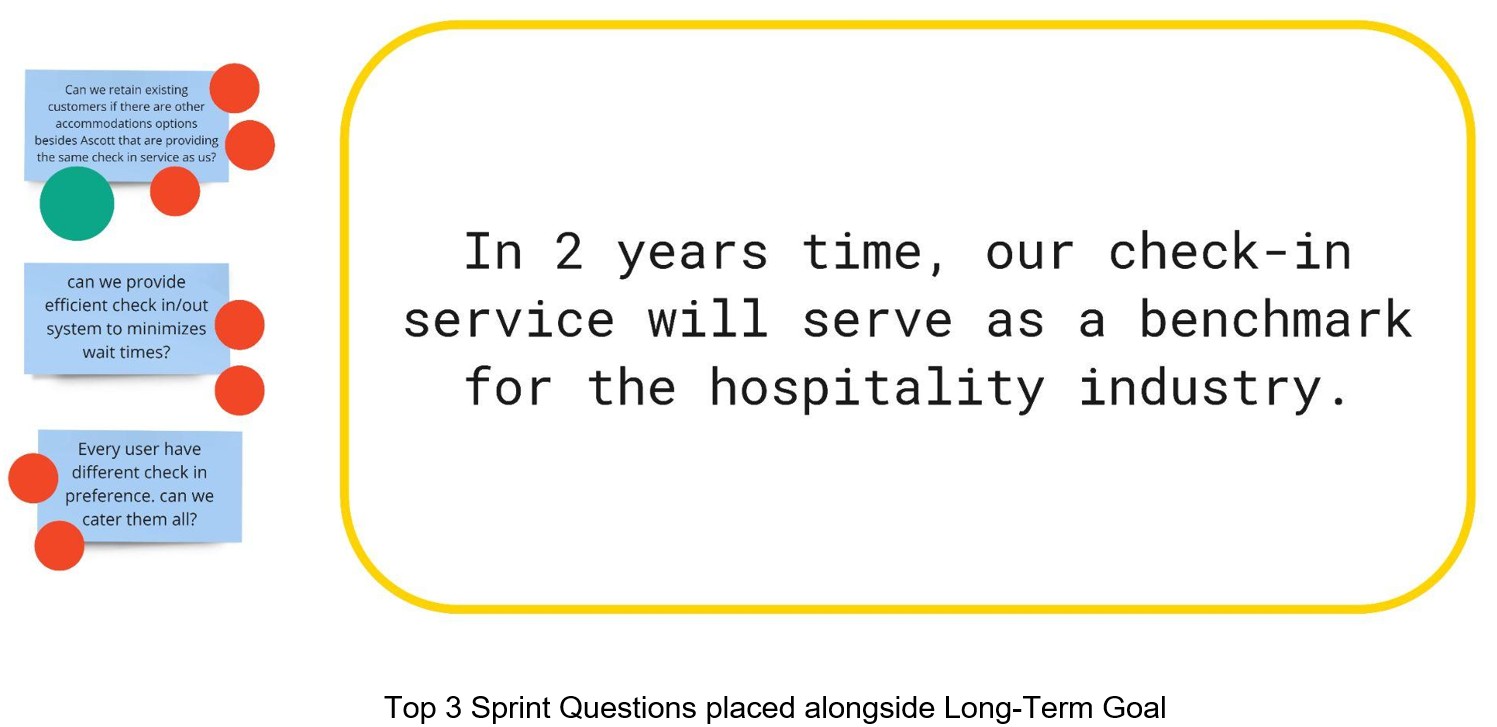
“Within 2 years, Ascott’s check-in experience will set the global hospitality standard.”
Strategic Anchors
-
Scalability: Designed for seamless adaptation across 220+ cities
-
Consistency: Unified quality for all guest touchpoints
-
Experience-Led: Elevating satisfaction as the core KPI
Proactive Risk Mitigation
Using “pessimistic forecasting”, we pressure-tested our goal by identifying critical vulnerabilities:
- What could make us fail?
- What are the biggest challenges we will face in trying to reach our Long-Term Goal?
Design Sprint: Focusing Through Democratic Prioritization
Phase: Critical Challenge Selection
Collaborative Scoping
To transform our long-term vision into actionable focus, we ran a structured voting session:
- Divergent Input: Each member proposed critical risks to our industry-benchmark goal
- Dot Voting: Team used ❗️3 red dots each to surface top challenges
- Decider Synthesis: She Qian (Decider) clustered votes into 3 key questions
- Strategic Finale: Single ✅ green dot selected our sprint’s north star:
“Can Ascott retain customers if competitors replicate our check-in experience?”
Why This Question Mattered
– Exposed the true design imperative: Beyond efficiency → competitive loyalty
– Forced solutions to address:
- Emotional differentiation (beyond functional check-in)
- Scalable uniqueness (hard-to-copy ecosystem advantages)
– Aligned UX with boardroom-level business metrics
How Might We Statements
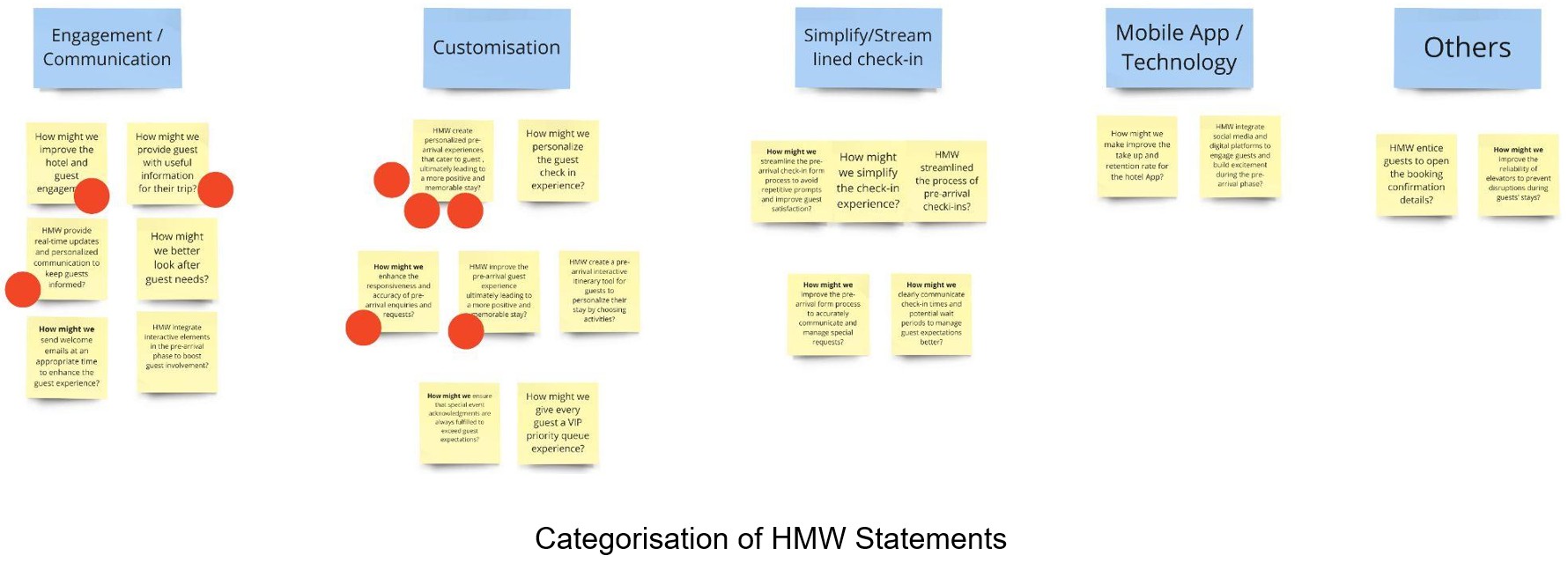
We organised our previously brainstormed “How Might We” (HMW) statements into labelled groups. This categorization allowed us to narrow down the HMW statements and create a voting tree to identify the most pressing issues to address during the sprint.
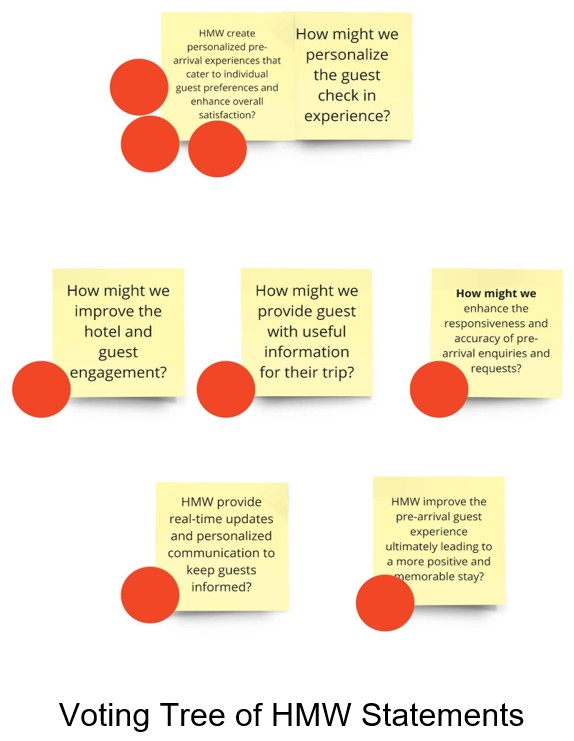
Design Sprint: Selecting Our Innovation North Star
Focused Opportunity:
“How might we create hyper-personalized pre-arrival experiences that transform satisfaction into loyalty?”
Why This HMW Won
- Strategic Driver – Business/UX Impact
- Goal Alignment – Directly enables our industry-benchmark vision by elevating emotional differentiation beyond functional check-in
- Competitive Moat- Personalization creates copy-resistant experiences (e.g., predictive preferences > faster check-ins)
- Pre-Arrival Leverage – Targets the highest-value engagement window: 48 hours before arrival when excitement peaks
Key Insight
“Generic efficiency wouldn’t retain guests—anticipatory personalization would. This HMW forced solutions that felt uniquely ‘Ascott’.”
Customer Interaction Map
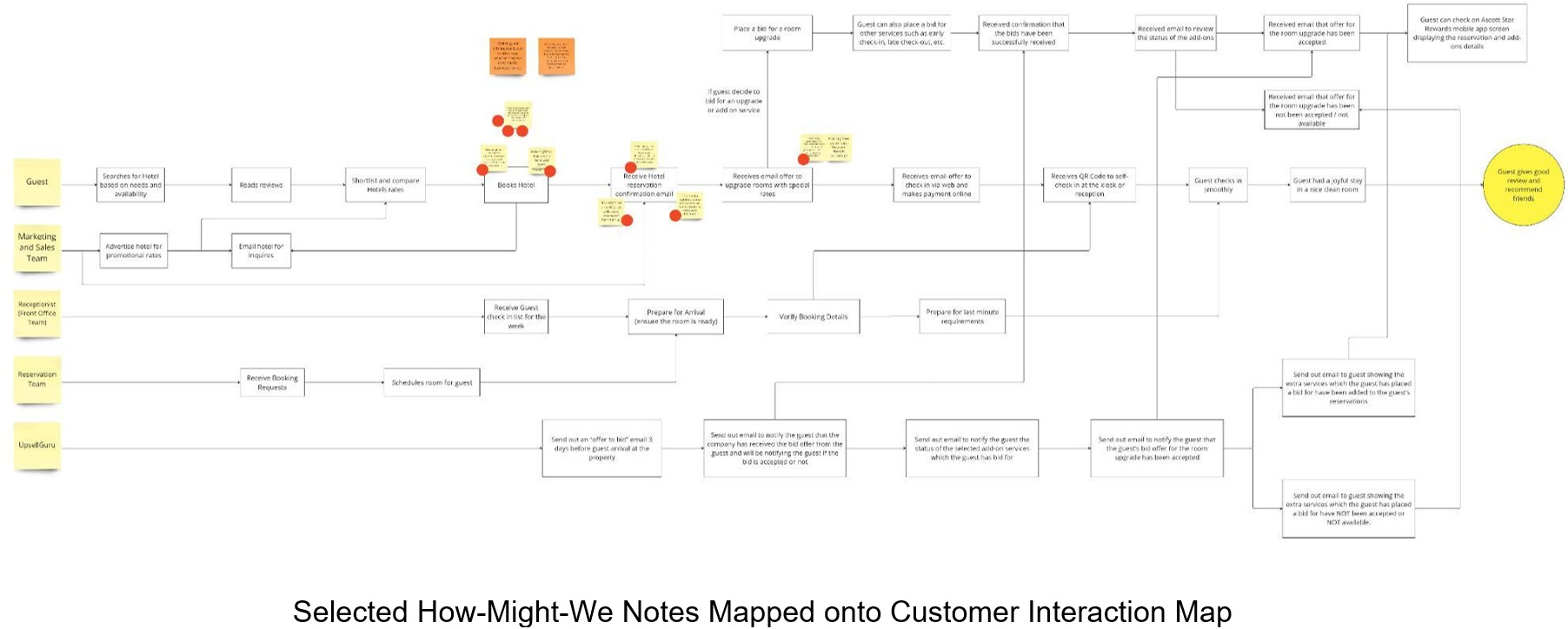
To wrap up Monday’s sprint, we created a customer interaction map that became an invaluable resource throughout the process. By mapping the customer’s interaction, we were able to:
- Clarify the customer experience
- Pinpoint critical interactions and areas for improvement
- Define a clear focus for the sprint
After gathering and evaluating all the long-term goals, sprint questions, and HMW statements, we chose to focus on redesigning the guest experience from the moment they book a stay with Ascott.
Tuesday: Sketch
Igniting Innovation Through Lightning Demos
Phase: Cross-Industry Inspiration
Strategic Benchmarking
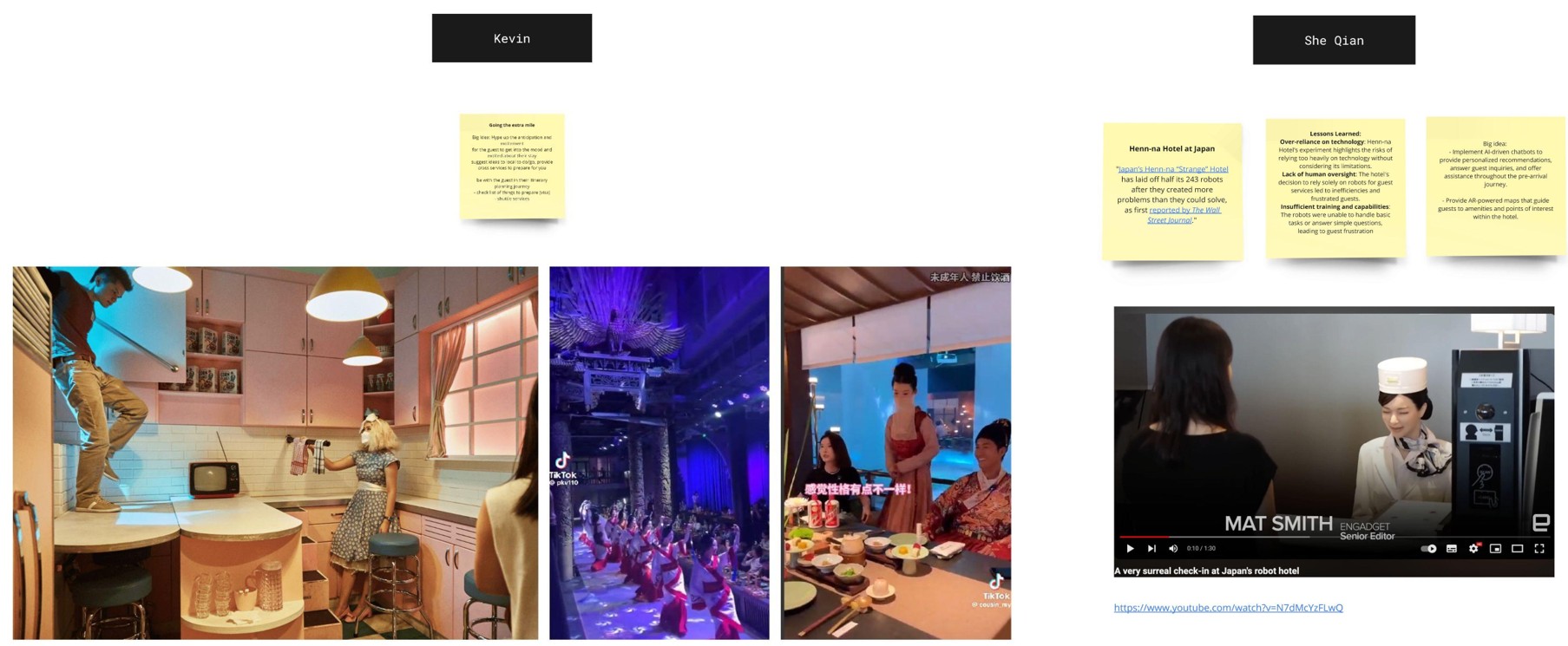
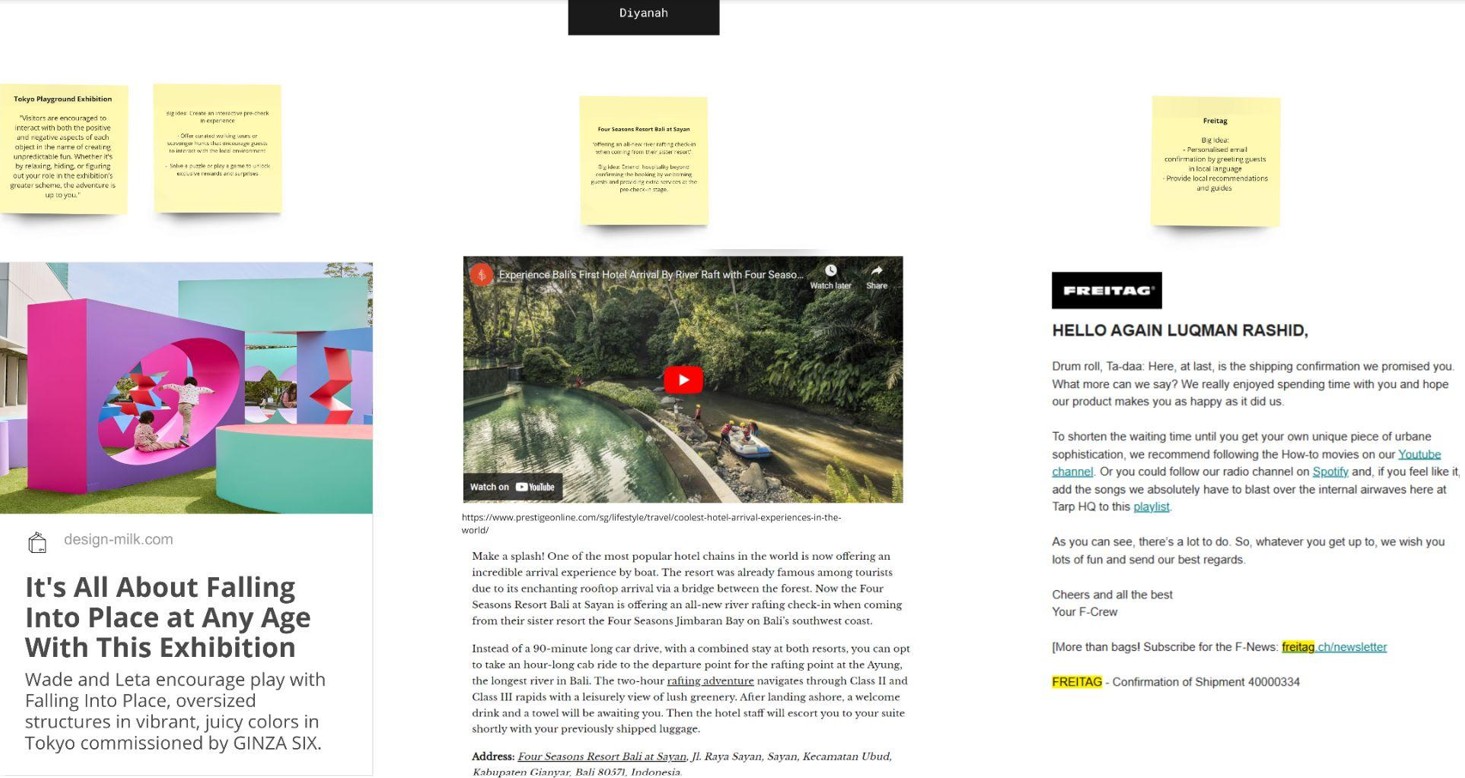
In 90 minutes, we reverse-engineered innovations from global leaders to address Ascott’s personalization challenge:
AI + Human Hospitality
→ Henn-na Hotel: Robotic efficiency enhanced by staff-led emotional connection
→ Our takeaway: “Technology handles logistics, humans own delight”
Gamified Discovery
→ Tokyo Playground Exhibition: Turning local exploration into interactive quests
→ Our takeaway: “Pre-arrival engagement as playful anticipation-building”
Pre-Arrival Journey Extension
→ Four Seasons Bali/Freitag: Services starting before physical arrival
→ Our takeaway: “Memorable moments > transactional efficiency”
Core Insight
“Winning solutions merge digital precision (AI) with artisan hospitality (human touch) to own the 48-hour anticipation window.”
Concept Solution Sketching
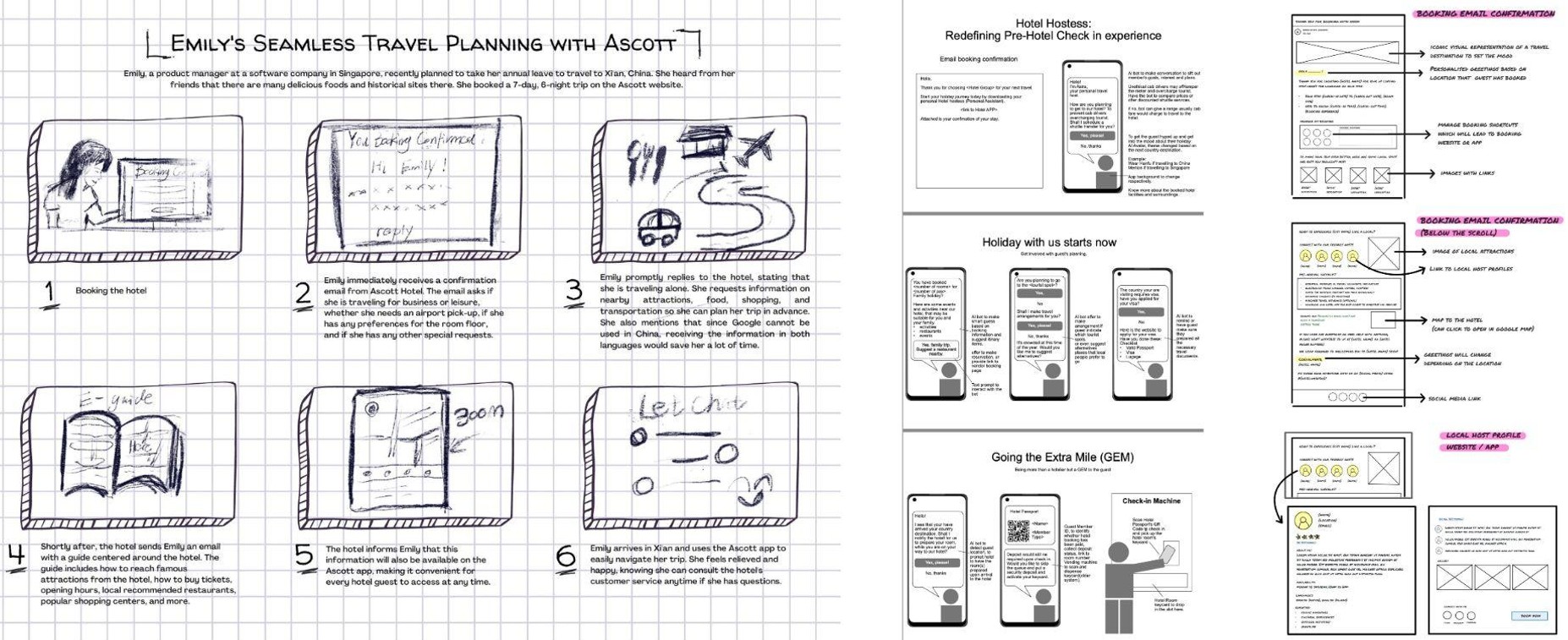
Building on these insights, we transitioned to individual solution sketching. This process involved creating visual representations of potential solutions, exploring multiple ideas, and ultimately selecting the most promising concept. The goal was to develop a well-defined solution that could be effectively communicated to the team.
Design Sprint: The Decisive Hour
Phase: Concept Selection (Sprint Day 3)
Structured Evaluation Framework
Facilitator Dianyah orchestrated a ruthless prioritization process to identify solutions aligning with our North Star:
“Personalization that builds copy-resistant loyalty.”
Key Steps
1. Pitch Sprint (5 min/sketch):
Solution storytelling focused on emotional impact and business defensibility.
2. Silent Heatmapping:
Team used 🔴 red dots to tag features solving core HMWs (e.g., surprise fulfillment).
3. Advisory Shortlisting:
Non-Decider team selected top concepts using heatmap patterns.
4. Decider Validation:
She Qian pressure-tested choices against long-term vision.
5. Critical Filter
“Does this concept make guests feel uniquely seen while being operationally scalable?”
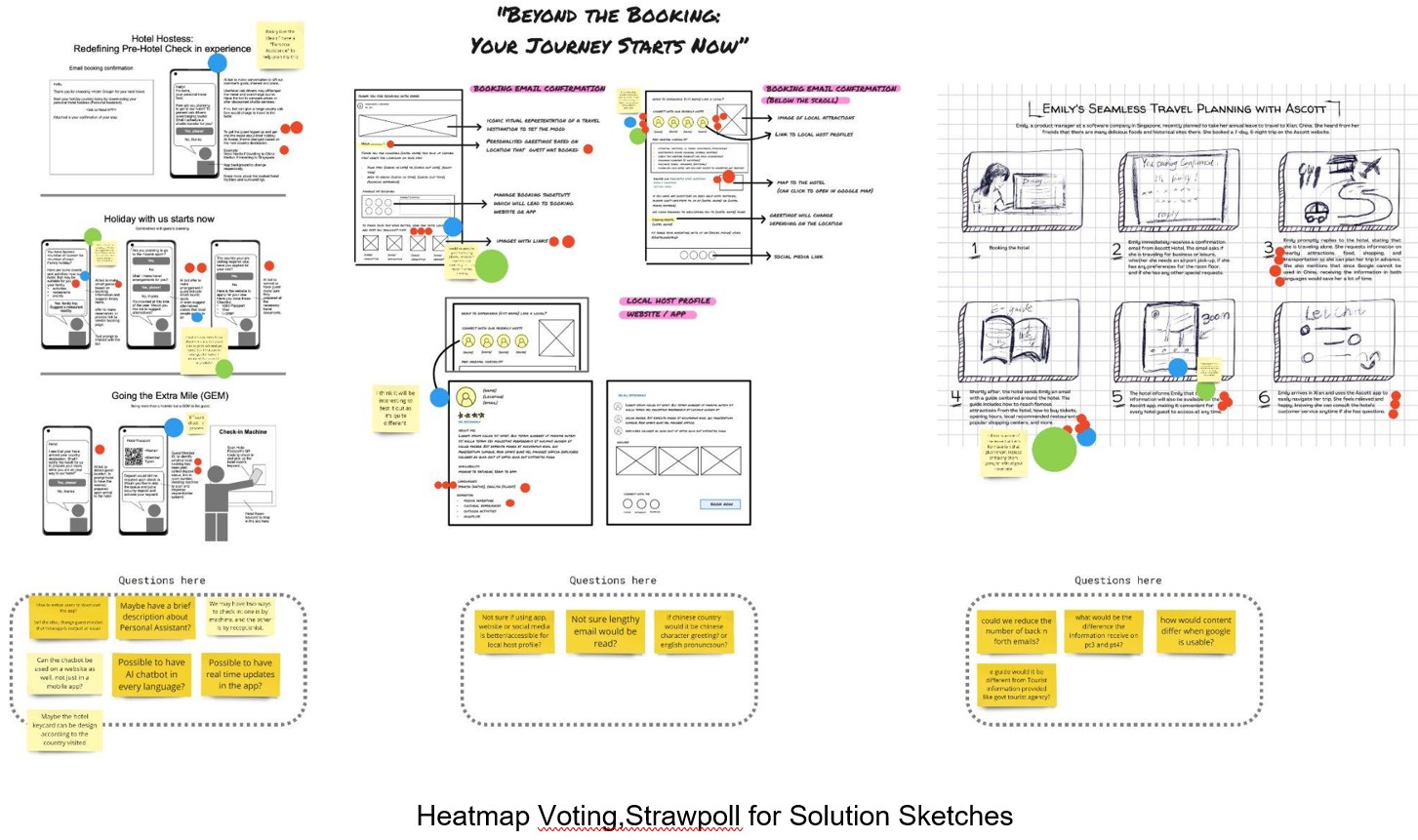
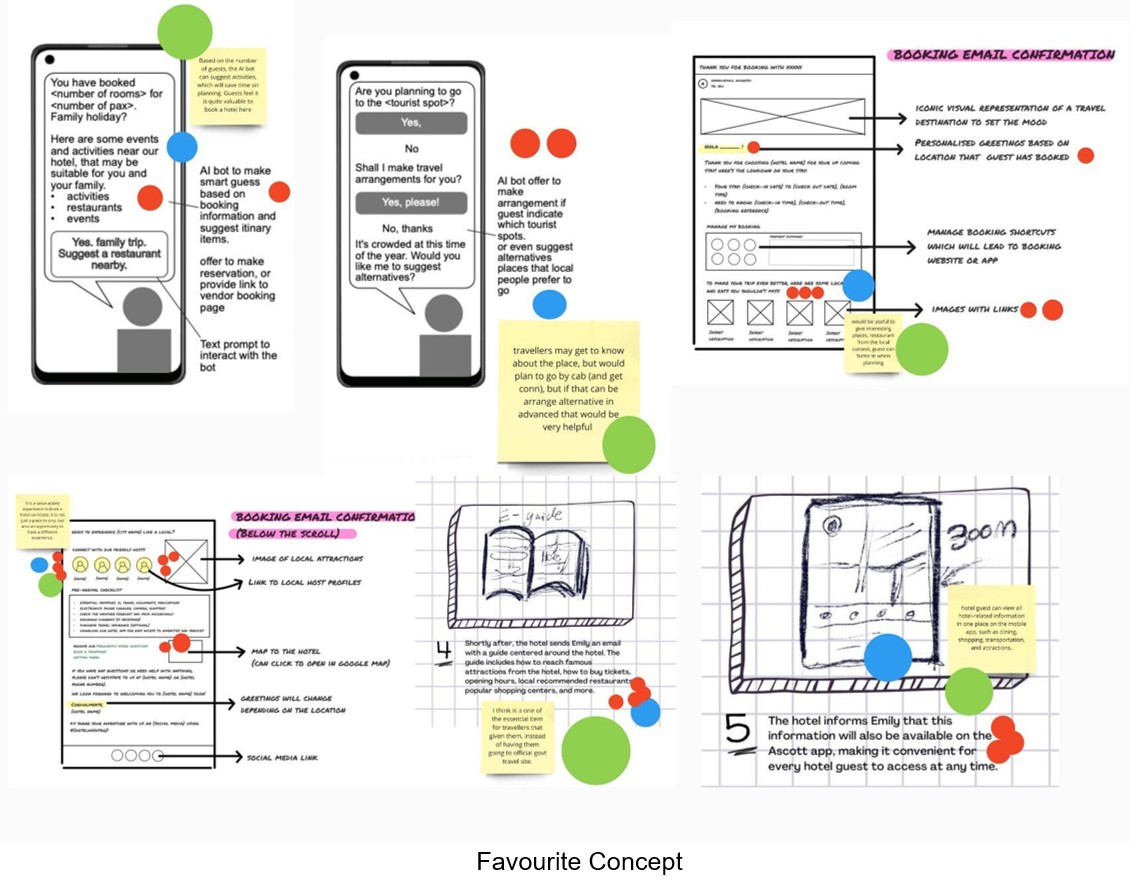
After carefully evaluating each idea and weighing their strengths and limitations, the Decider (She Qian) made her final selections. She chose the winning concepts based on how effectively they addressed the sprint questions, ensuring they were in line with our team’s overall objectives.
The key features selected include:
- A mobile app feature that allows hotel guests to access all hotel-related information in one place, such as dining, shopping, transportation, and local attractions.
- An AI bot that suggests activities tailored to the number of guests, streamlining the planning process.
- A value-added experience that frames booking a hotel with Ascott as not just a stay but an opportunity for a unique and memorable experience.
- An option for alternative transportation arrangements to help travellers avoid common issues, like being overcharged by cabs.
- Personalised recommendations for local points of interest and restaurants, helping guests plan their stay more effectively.
- A feature that provides travellers with curated information, eliminating the need to consult official government travel sites.
Thursday: Prototype
User Test Flow
Following the selection of winning solution concepts, our team turned its attention to defining the user’s experience within the proposed solution. To achieve this, each member independently created a user flow. These user flows outlined the steps a user would take, from their initial interaction with the solution to their desired outcome.

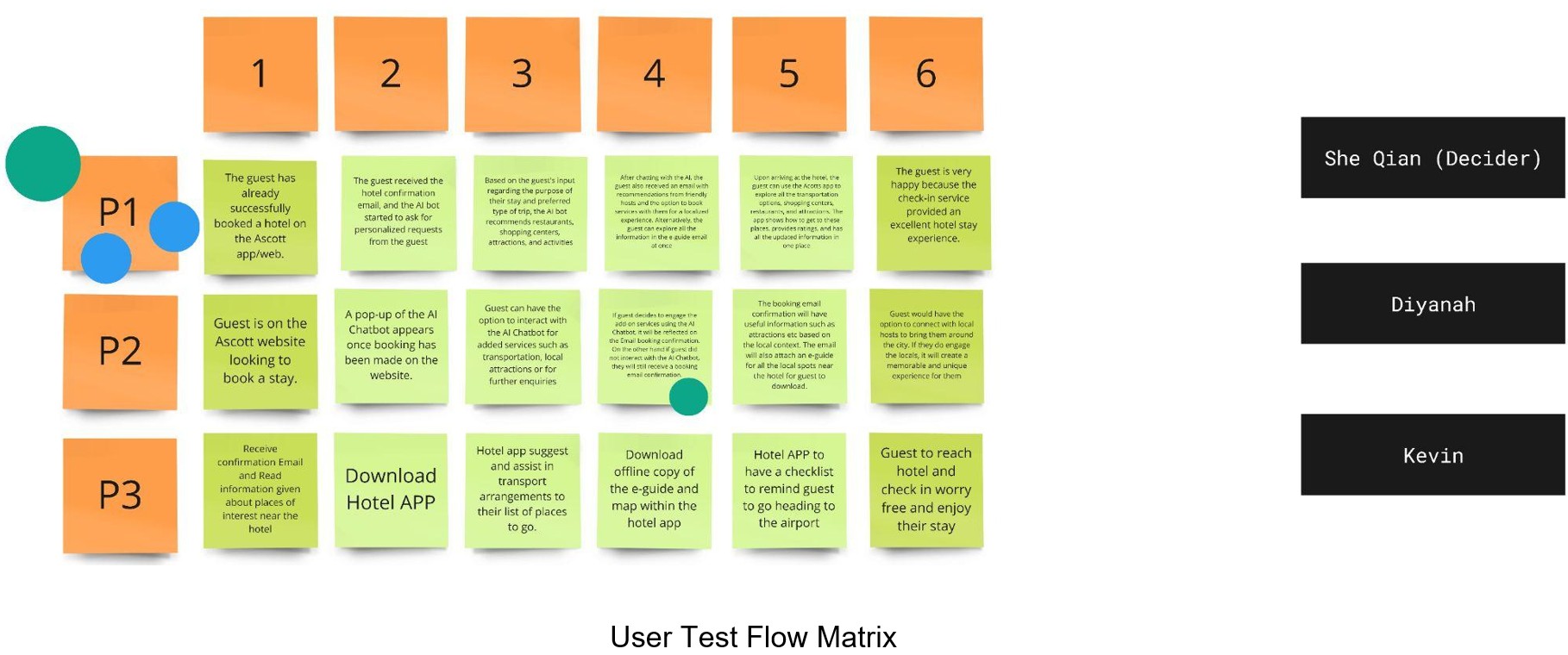
The Decider (She Qian) selected P1 as the preferred user test flow. This flow involves a guest receiving a hotel booking confirmation via email, followed by an AI-driven interaction to personalise their stay.
The AI chatbot will engage the guest, gathering information about their trip purpose and preferences. Based on this input, the AI will provide recommendations for restaurants, shopping centres, attractions, and activities. Additionally, the guest will receive an email with recommendations from local hosts, offering opportunities for personalised experiences.
Upon arrival at the hotel, guests can utilise the Ascott app to access comprehensive information about transportation options, shopping destinations, dining choices, and local attractions. The app will provide directions, ratings, and up-to-date details.
The overall aim is to enhance the guest experience through personalised recommendations and convenient access to local information.
Key Points:
- The AI chatbot interaction is optional but will enrich the guest experience.
- Booking confirmations will be issued regardless of AI Bot engagement.
- The Ascott app will serve as a centralised hub for local information and services.
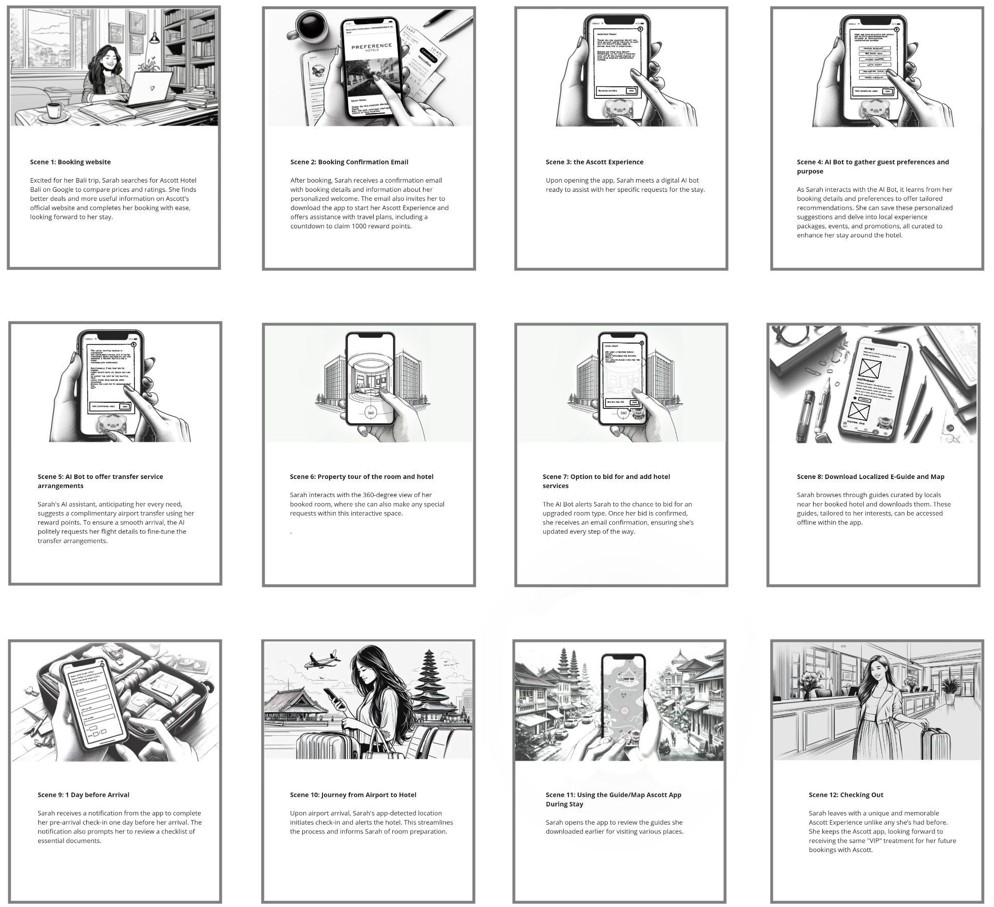
The selected user flow served as the foundation for creating a storyboard. This visual representation broke down the user journey into sequential frames, providing a detailed roadmap for the prototype.
Storyboard
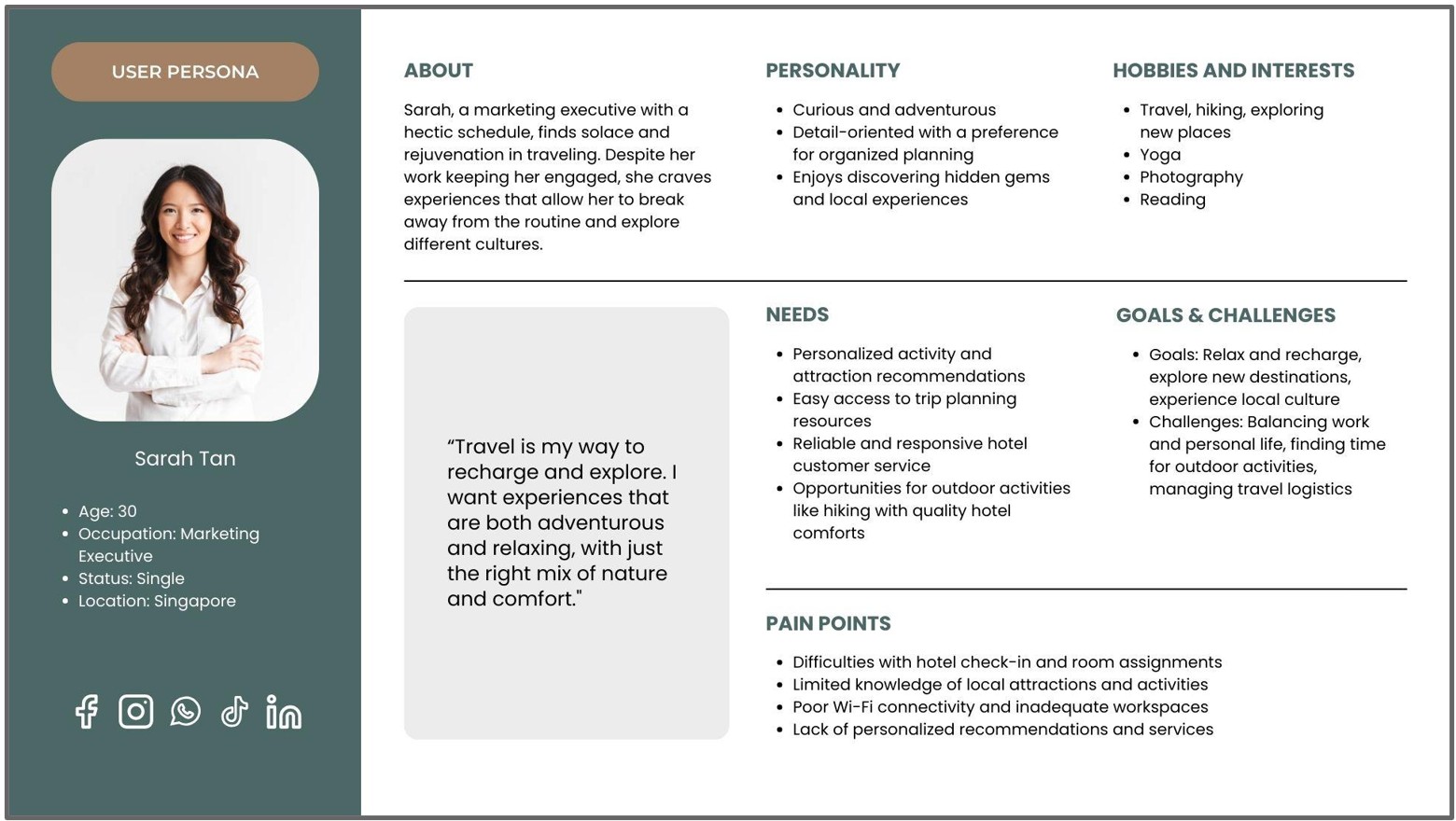
Next, we outlined the flow on the board, incorporating key concepts to complete the storyboard and visualise how guests would interact after booking a hotel. To bring this to life, our team created a persona to imagine the steps a guest would take.
Persona
Storyboard
Prototype Development
To transform our storyboard concepts into a tangible experience, we developed an interactive prototype using Figma. This medium allowed us to rapidly create mid to high-fidelity screens and bring the user flow to life through animation.
Aligned with our design sprint questions of personalising the pre-arrival experience and differentiating Ascott from competitors, we prioritised the following features:
- Email Booking Confirmation
- Ascott Cubby Greeting
- Homepage
- 360° Hotel View
- Travel Local Guides
- Travel Checklist
- Map
- Pre-Arrival Check-in
By focusing on these core elements, we aimed to address the identified pain points and create a compelling user experience.
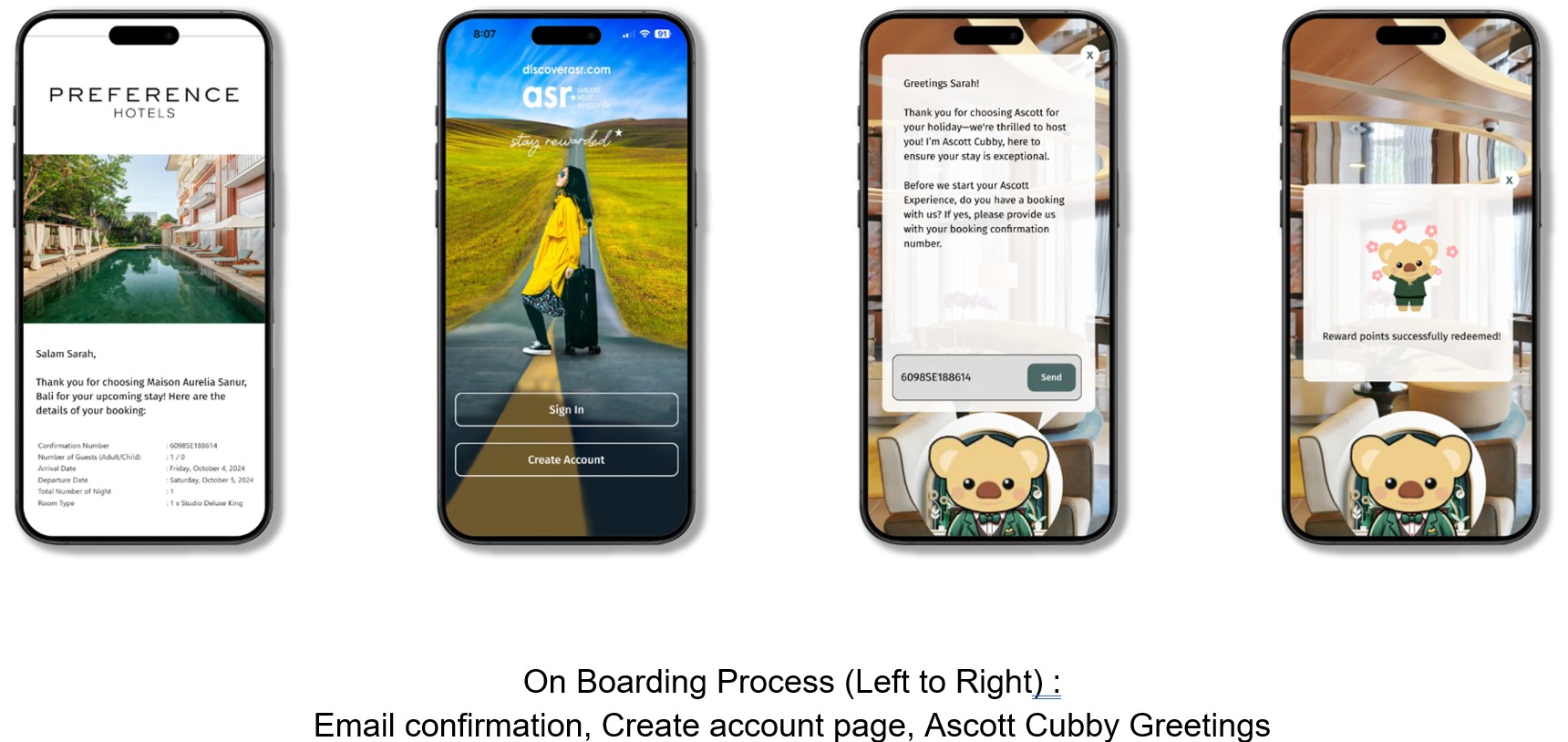
Onboarding Process
After booking a stay on Ascott’s website, users receive an email confirmation with all their booking details and a prompt to download the Ascott app to redeem points.
Once the app is downloaded and an account is created, users are welcomed by Ascott Cubby, an AI Bot designed to personalise their experience. They are asked to enter their booking confirmation number to receive tailored recommendations.
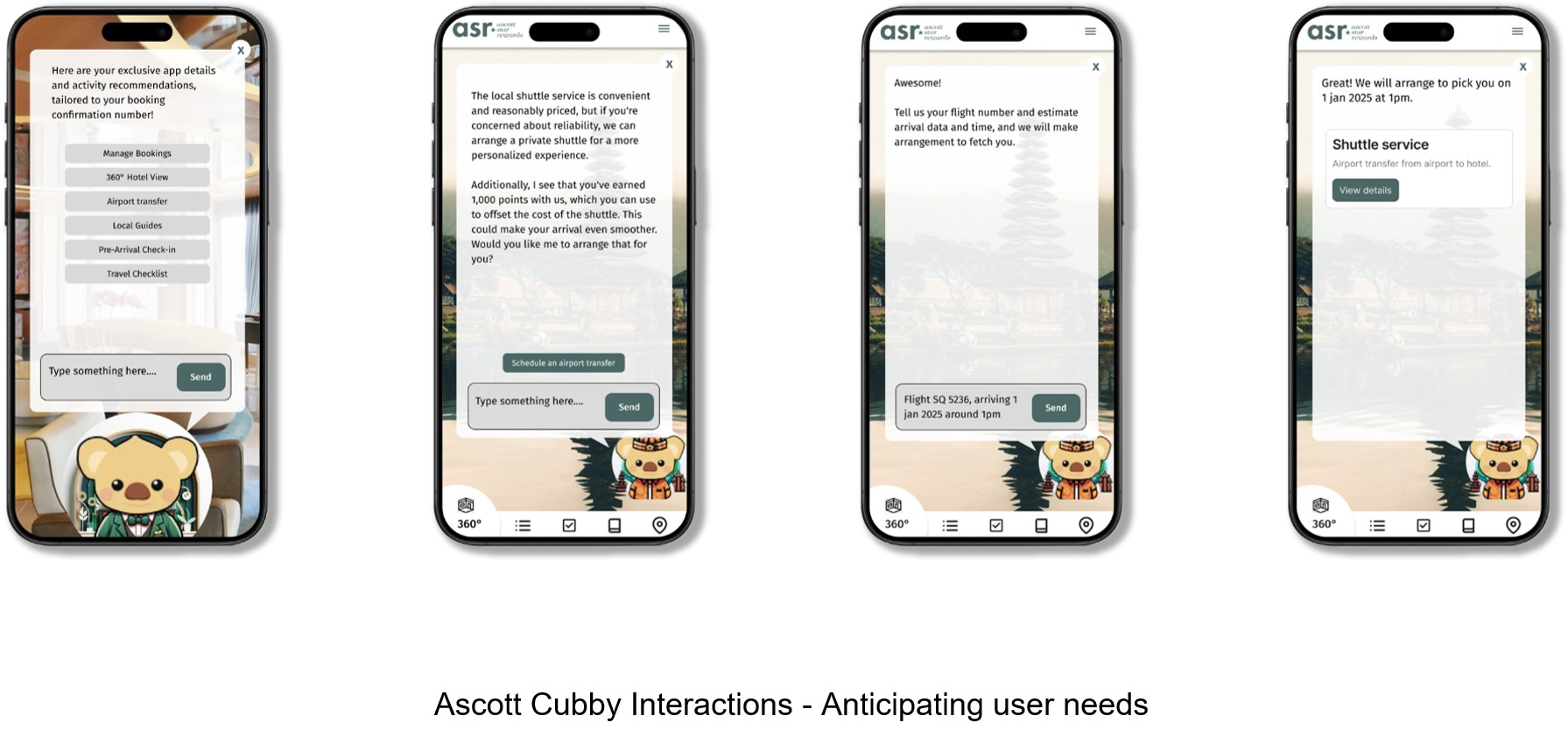
Ascott Cubby Interactions
Users can interact with Ascott Cubby, which anticipates their needs—from arranging airport transfers to providing a travel checklist, local guides, and a 360° hotel view. Alternatively, they can navigate the app using five tabs at the bottom of the screen.
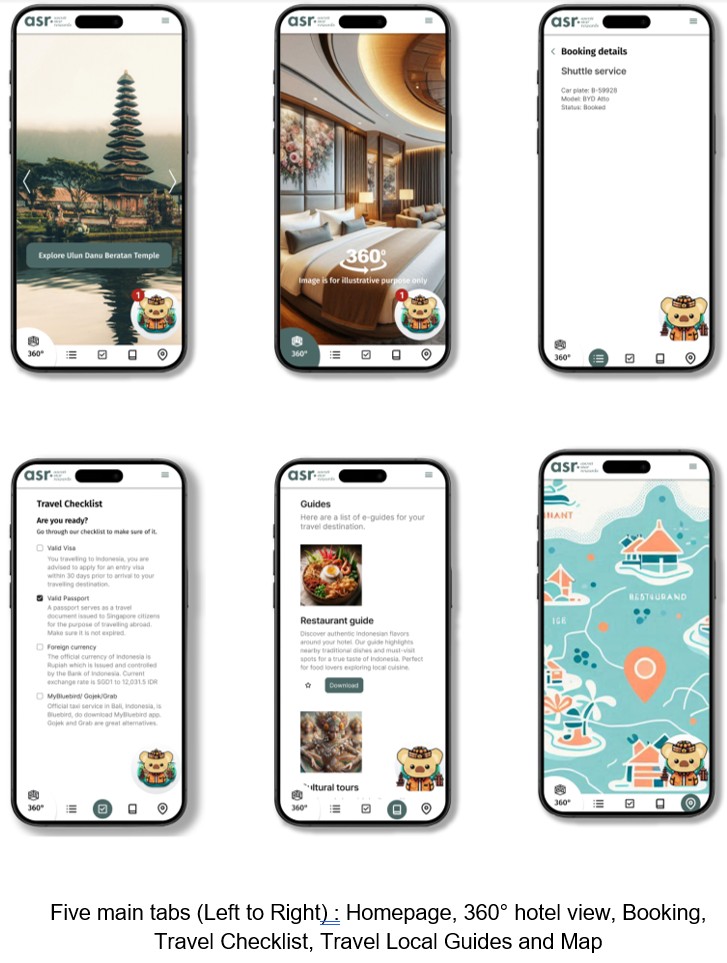
Five Main Tabs for Navigation
The app features six main tabs for easy navigation:
- AI Chat with Ascott Cubby
- 360° Hotel View
- Booking
- Travel Checklist
- Travel Local Guides
The 360° Hotel View feature lets users explore their booked room interactively, with the option to upgrade within the virtual space. Ascott Cubby further enhances this experience by providing prompts for room upgrades and bidding opportunities, ensuring users stay informed.The Travel Local Guides tab offers locally curated content tailored to users’ interests and preferences, all of which can be accessed offline.
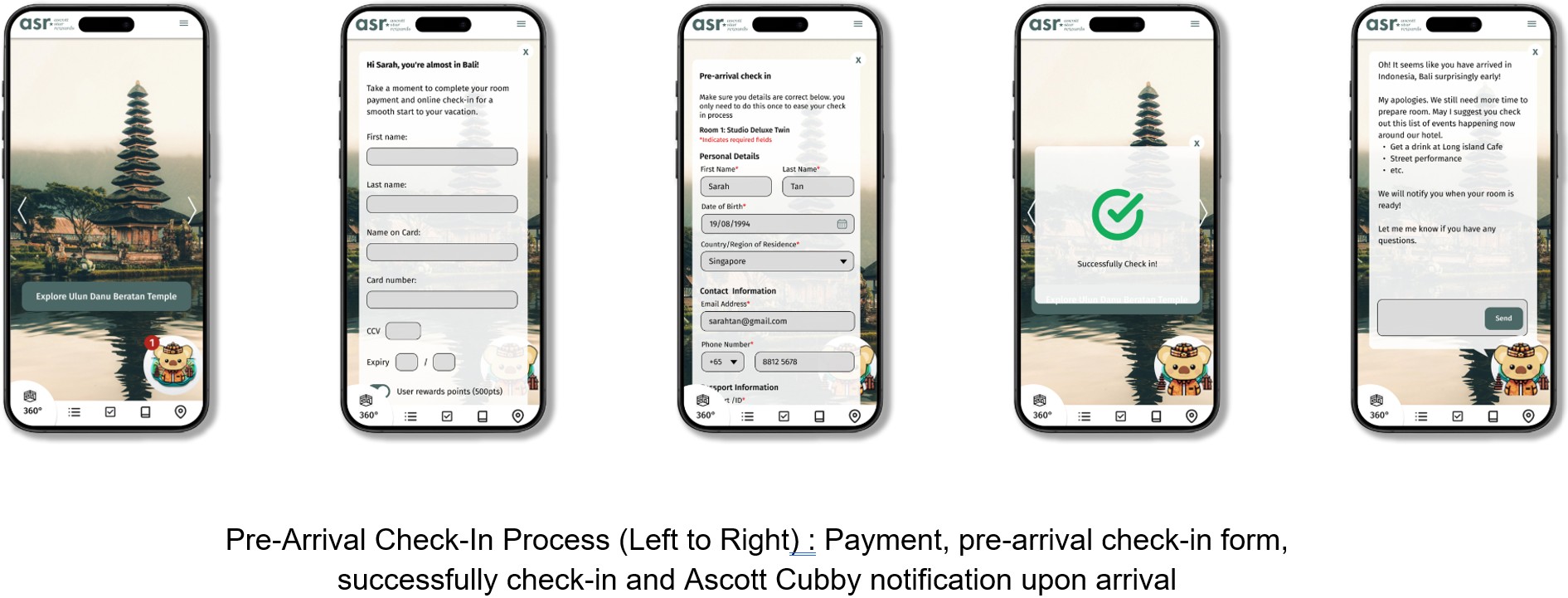
Pre-Arrival Check-In
One day before arrival, users receive a notification from the Ascott app to complete their payment, finalise pre-arrival check-in, and review a checklist of essential documents, ensuring a seamless and well-prepared experience.
Friday: Test
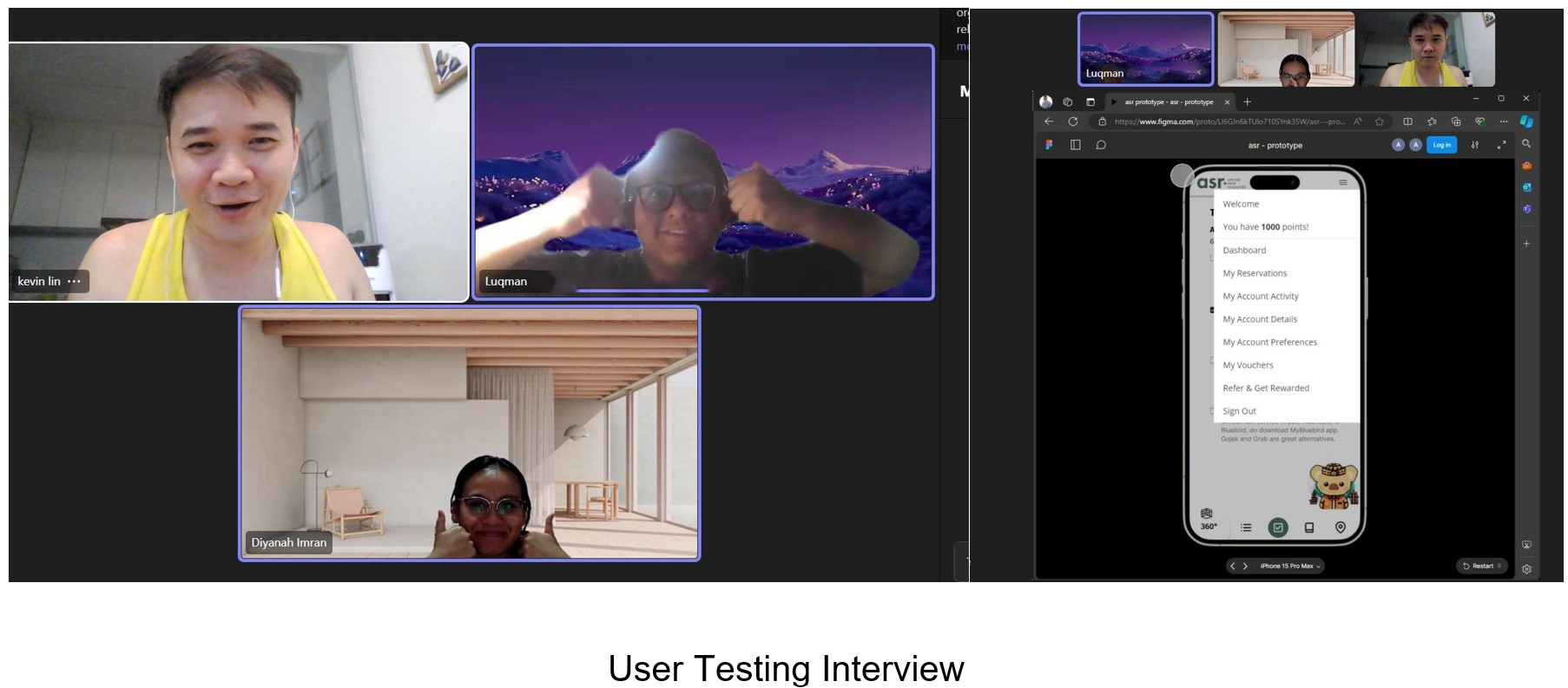
Interview and User Testing
We crafted a comprehensive sprint interview guide, complete with task scenarios and follow-up questions, to ensure consistency during user testing. Targeting our identified user profiles, we conducted prototype testing with 7 participants aged 27-43.
User Insights
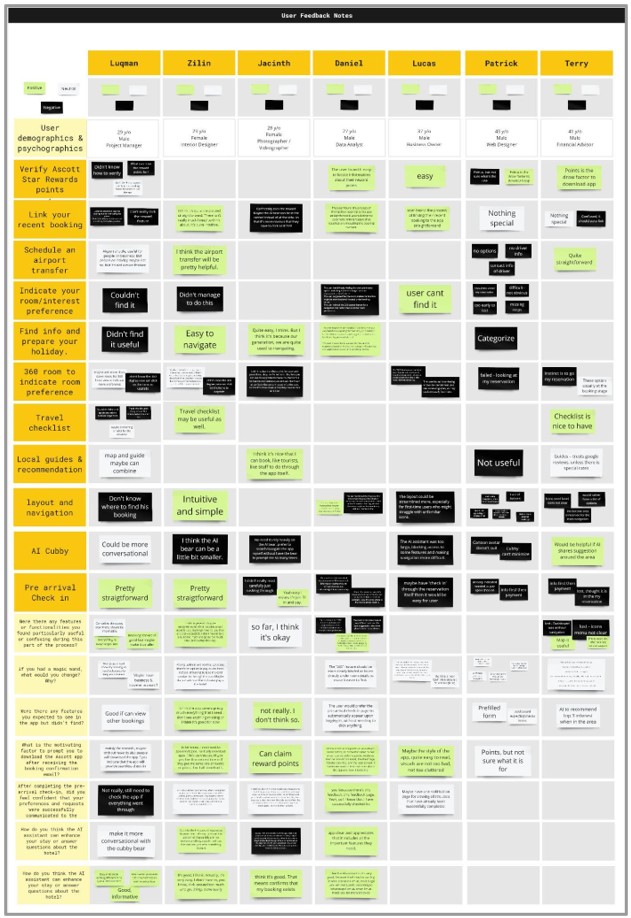
To effectively capture user feedback, we used a colour-coded grid system with black, green, and white post-its to categorise negative, positive, and neutral responses, respectively.Overall, user feedback was favourable, though several key areas for improvement were identified. Here are the main insights:
1. Motivation for Download:
- Rewards: Most users are motivated to download the app primarily for points or rewards. Emphasising rewards and providing clear incentives can boost app downloads.
- Design and Usability: Attractive design and easy-to-use interfaces are important for initial engagement.
2. App Integration and Linking:
- Auto-Linking: Users prefer an automated process for linking bookings to the app to simplify their experience.
- Manual Entry Issues: Manual entry of booking numbers is seen as cumbersome; simplifying or automating this step is recommended.
3. App Layout and Navigation:
- Clarity and Labels: Users find icons unclear and prefer text labels to improve navigation. A more intuitive layout and clear labelling are needed.
- Feature Placement: Key features like room preferences and the 360° view should be placed more intuitively within the app to improve accessibility.
4. Feature Usefulness:
- Local Information: Features providing local information, maps, and travel checklists are appreciated and considered useful.
- AI Assistant: The AI assistant is valued but could benefit from refinement in its design and functionality, including contextual recommendations and less intrusive interactions.
5. Pre-Arrival Check-In:
- Process: Users generally find the pre-arrival check-in process useful but have experienced confusion about its placement and sequence. Ensuring clarity in notifications and integration with reservation details is crucial.
- Confirmation: Providing confirmation summaries and reassurance about communicated preferences can enhance user confidence.
6. Challenges and Suggestions:
- Navigation Issues: Many users struggle with navigating the app and locating specific features. Improving the app’s navigation and simplifying access to important functions is necessary.
- Feature Improvement: Users suggest integrating features more seamlessly within the reservation page and enhancing the clarity of icons and labels.
7. Future Use and Comparison:
- Likelihood of Use: Users are willing to continue using the app if their experience is improved, particularly in terms of usability, feature integration, and navigation.
- Comparisons: The app is often compared unfavourably with other booking platform apps like Agoda, which are perceived as more intuitive and user-friendly. Enhancing the Ascott app’s design and functionality could improve its competitiveness.
8. Overall Experience:
- Positive Aspects: Features such as local information and AI assistance are appreciated.
- Areas for Improvement: Key areas for improvement include navigation, feature placement, and user interface clarity. Addressing these issues can lead to a more satisfying user experience and increased app usage.
Final Design – Refinements
Based on our user insights, we have identified six key iterations for improvement:
- Relocate Ascott Cubby: Move the Ascott Cubby (AI Bot) to a more prominent position on the main interface for better visibility and accessibility.
- Move 360° Room View: Position the 360° room view feature under the reservation section to streamline access and provide better context within reservation details.
- Improve Bottom Menu Navigation and Icons: Redesign the bottom menu with clearer labels and more intuitive icons to enhance overall navigation and usability.
- Resequencing the Pre-Arrival process: Reorganise the order of the pre-arrival process to be more guest focused.
- Pin Interactive Buttons in 360° Room View: Make sure interactive buttons within the 360° room view are pinned and easily accessible to boost user interaction.
- Add Intermediary Screens: Implement intermediary screens to better guide users through key stages and transitions, improving navigation and user flow.
Final Prototype
Next Steps
To ensure the effectiveness of the proposed solution, further user testing and refinement are essential. Additionally, we should consider exploring the following features:
- Location Detection and Activity Suggestions: Integrate location detection to recommend relevant activities and services when a guest arrives early at the airport or reaches the hotel ahead of schedule.
- Ascott Passport Experience: Develop a unified Ascott Passport that provides access to all Ascott hotels, creating a seamless and integrated guest experience across different properties.
- Premium Gym Access Membership: Introduce a premium membership that grants access to gym facilities at all Ascott hotels, fostering ongoing engagement with the app and enhancing the overall guest experience.
Conclusions
The collaborative effort undertaken for this project has been an invaluable learning experience. By applying the Design Sprint methodology, we successfully identified key pain points in the pre-arrival guest experience and developed a solution-focused approach.
We believe that the proposed solution has the potential to significantly enhance the guest experience at The Ascott Limited. The integration of technology with personalised service offers a promising path forward for the hospitality industry.